

We are at a moment when development infrastructure that has been built over decades is being dismantled in real time. Funding is funding pulled and withheld, institutions are hollowed out, and communities are absorbing the consequences of decisions that are often made far from their lives. The question of who leads and who decides how development infrastructure is remade and how resources are distributed carries high stakes.
With this context in mind, we partnered with the Global Fund for Children for "The Future of Locally-Led Development," a convening co-hosted alongside Humanity United and Open Society Foundations during the 2026 Annual Meetings of the IMF and World Bank. We brought together more than 90 practitioners, experts, and funders to explore how development systems must evolve amid rapidly shifting political, financial, and institutional realities. The central question of our convening was how to accelerate the shift of power and resources toward community-led development before the window for meaningful transformation closes, and power consolidates further away from the communities it should serve.
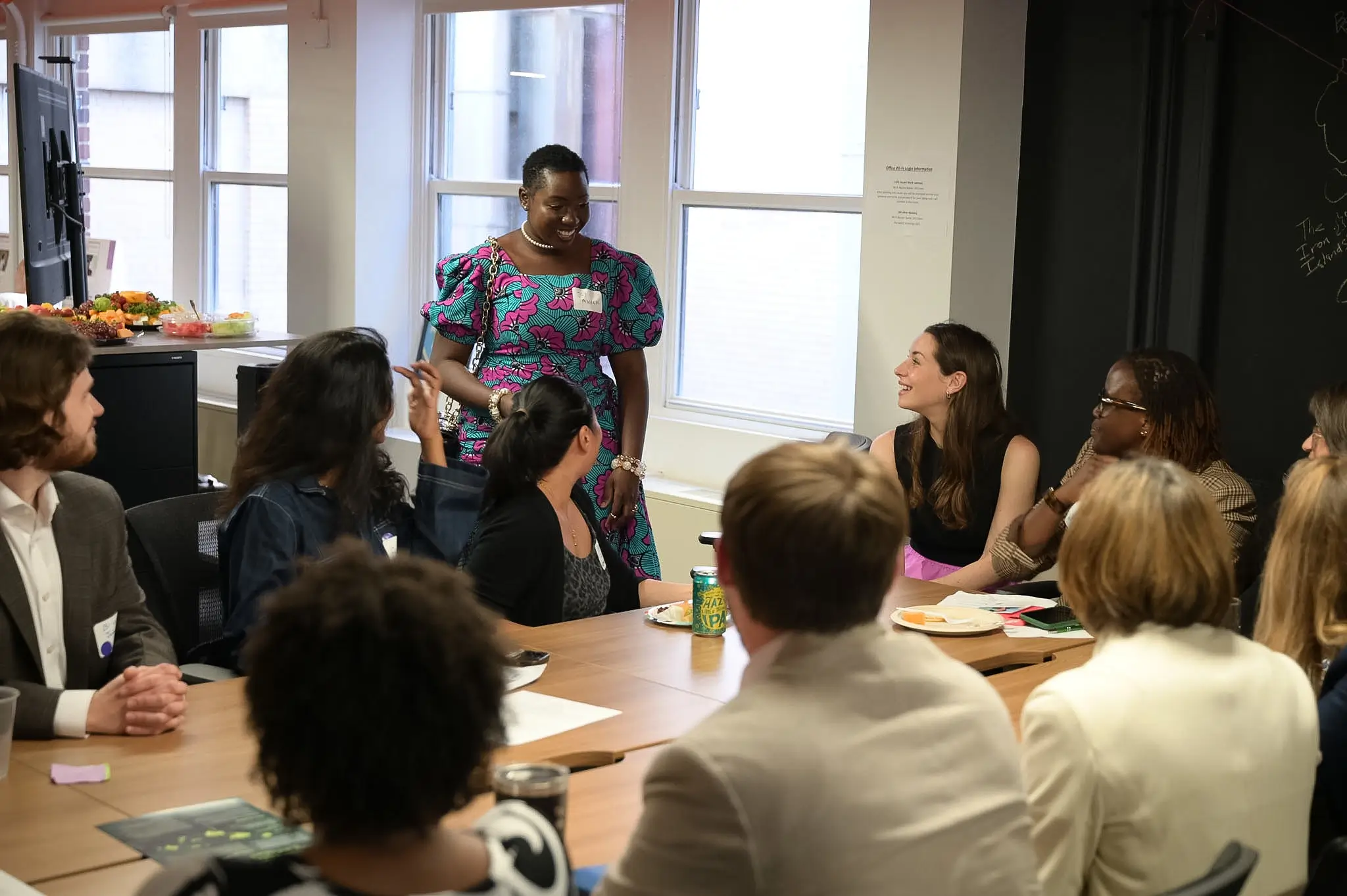
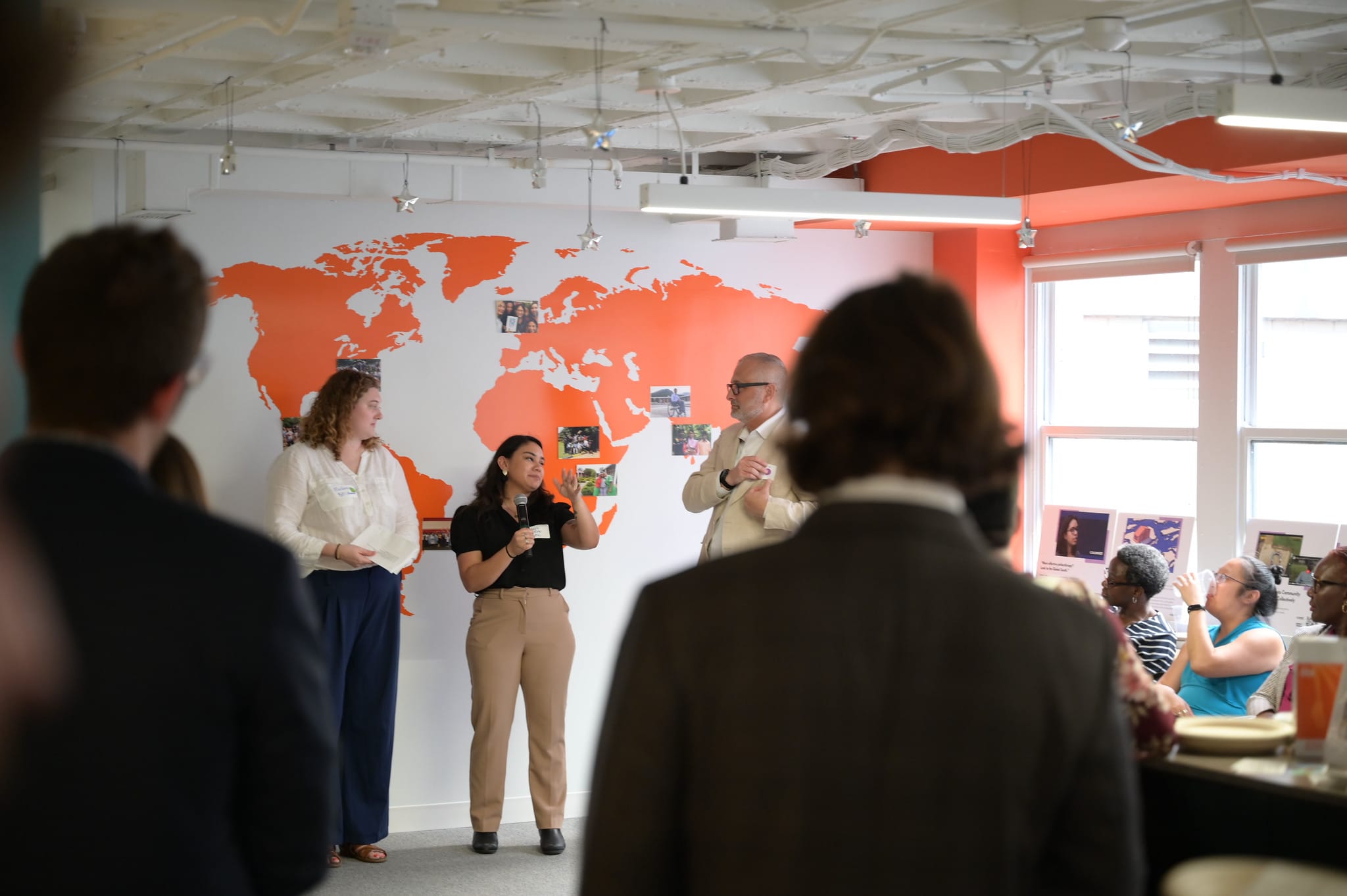
The event, held under Chatham House Rules, began with invited speakers including Soumya Dabriwal, co-founder of Project Baala, Emily Bass, author of “To End a Plague,” and Dr. Kakenya Ntaiya, Founder of Kakenya’s Dream, who each highlighted their individual perspectives on both the potential and the persistent challenges of transitioning toward local leadership.
We then asked attendees to rotate through three facilitated breakout discussions, on financing models, Global Majority leadership, and the structural conditions necessary for genuine community-led development. Each of these breakouts was premised on the idea that the future of locally led development demands more innovative thinking than the sector has so far been willing to attempt.
The discussions revealed an ongoing tension: While the rhetoric of “localization” has retained traction in the aftermath of USAID's dismantling, the conversation too often stopped at inclusion rather than arriving at the harder question who holds power, and on what terms. Inclusion invites people to the table; power shift determines who controls it. The takeaways made clear that truly meaningful transformation remains uneven and incomplete.
One central theme in the discussion of financing models was the emergence of new financial tools such as pooled funding, unrestricted grants, and blended finance. These mechanisms have the potential to redistribute power and flexibility, giving local actors greater autonomy as traditional aid structures strain under current pressures. Attendees pointed to concrete examples, including philanthropic investments in refugee-led organizations that demonstrate what becomes possible when communities with lived experience are resourced directly, rather than through layers of intermediaries.
Even so, the scale of global need far exceeds available philanthropic resources, and the aid gap created by pulled government funding cannot be closed by innovative financing models alone. While these mechanisms are evolving, they remain insufficient on their own to meet the current moment.
In the discussion of Global Majority leadership, attendees grappled with whose participation and authority are actually prioritized when development decisions are made. "Local" is often ambiguously defined, and decision-making power frequently remains concentrated in external institutions. Community engagement can become tokenistic when local actors are consulted but not enabled. The difference between mere inclusion and true power shift matters enormously.
Concerns voiced by local leaders themselves about elite capture, corruption, and shrinking civic space further complicate the situation from their perspective, as does the erosion of trust between communities and funders, which has accelerated by the restructuring of major aid agencies. Donor-driven priorities and rigid metrics can distort local needs, imposing definitions of success that do not reflect community realities, while small organizations may lack the capacity to absorb large-scale funding in ways that are efficient or sustainable.
To address this, participants proposed concrete shifts: investing in women as leaders, increasing the proportion of funding directed to local organizations, and embedding community input throughout program design and implementation. Co-design emerged as a key principle. Development initiatives should begin with locally identified problems rather than externally imposed solutions.
In the discussion of structural conditions, attendees emphasized that development progress is rarely linear or binary. Localization is often framed as a clear-cut shift: either systems are locally led or they are not. In reality, though, many organizations operate within a "messy middle," navigating partial progress, competing priorities, and structural constraints. This nuance is frequently overlooked, leading to missed opportunities to recognize and build on what is already working.
USAID had been working to embed locally led development across its portfolio, making its dismantling in 2025 a significant setback that left the sector without an obvious convener among Global North funders. The push toward genuine power shift was built by local organizations long before institutional actors adopted its language, and local leaders have long noted that even at its peak, localization rhetoric rarely translated into true power shift, but with USAID’s absence, momentum among Global North actors considerably diminished over the past year. But the disruption also exposed the limits of centering any single institutional actor in a movement rooted in community agency, and in doing so, reopened the question of who should set the agenda, and how.
These structural challenges also present opportunities. Bilaterals have the potential to take a more active role in service delivery and infrastructure development, particularly when supported by innovations in civil society such as participatory budgeting, community scorecards, and tech-enabled citizen engagement, which can strengthen accountability and responsiveness. Attendees argued that collaboration between governments and civil society would be enhanced if reframed as cooperative rather than adversarial, and that recognizing government actors as themselves constrained by systemic limitations could open new pathways for change.
Attendees noted that the path forward is neither simple nor linear. Trust-based philanthropy, while widely endorsed in theory, faces practical barriers rooted in entrenched mindsets and accountability frameworks. Funders often struggle to relinquish control, and organizations accustomed to directive funding may find open-ended support difficult to navigate. Bilateral agencies, meanwhile, must reconcile localization goals with internal pressures to demonstrate easily communicable outcomes. Breakdowns most often occur at the intersection of trust, power, and incentives: restrictive funding, conditionality, and risk aversion perpetuate unequal relationships, while tokenism and resistance to critical feedback undermine genuine partnership.
Addressing these issues requires a reconfiguration of incentive structures, longer implementation timelines, and a shift from transactional funding to collaborative problem-solving. What emerged from this convening was an honest and multidimensional account of where the sector actually stands. Community-led development was framed not as a singular model but as a spectrum of evolving practices. Progress will depend on the willingness of funders, intermediaries, and institutions to act directly on redistributing power, extending trust, and following the lead of communities who have been doing this work longest and with the expertise of lived experience to shape how the sector remakes itself toward local power.


.jpeg)


.webp)


