
When Ben Wrobel wrote that philanthropy’s monopoly era has ended, he raised an important question about where power sits in the sector and who gets to shape its future. For decades, a relatively small number of influential foundations and institutions have helped define philanthropy’s priorities, practices and narratives. As that influence is challenged and new actors gain visibility, there is an opportunity to build a more diverse and equitable philanthropic field. But a shift away from traditional centres of power does not automatically mean that power is more widely shared. Without deliberate efforts to address existing inequalities, it can simply become concentrated in new institutions.
This is why strengthening locally rooted philanthropic ecosystems matters. Rather than replacing one set of powerful institutions with another, we need to invest in the networks, relationships and organisations that enable a wider range of actors to shape how philanthropy works, whose knowledge is valued and how decisions are made.
Across the Global South, this work is already underway. Locally rooted philanthropic networks and institutions are connecting organisations, producing knowledge, mobilising resources and creating opportunities for communities to influence decisions. Some of this work is already being supported by international funders, particularly in contexts and regions where networks are recognised as an essential part of philanthropy support ecosystems. But the broader ecosystem-building functions these actors perform, connecting people, sharing knowledge, building collective voice and strengthening locally rooted philanthropy, remain less visible and less consistently resourced.
Notably, domestic funders do not yet consistently invest in the networks and organisations that support their own philanthropic ecosystems. WINGS’ research, including our report Unlocking Philanthropy’s Potential, has long identified the challenge of ensuring the sustainability of philanthropy support organisations: in 2015, 80% of spending on philanthropy support infrastructure was concentrated in North America. While no comparable global expenditure study appears to have been undertaken since, the contrast in funding remains striking. In 2021, MacKenzie Scott provided $146 million to just 26 US national infrastructure groups. By comparison, the WINGS Lift Up Philanthropy Fund, which prioritises philanthropy support in Asia-Pacific, Africa and Latin America and the Caribbean (LAC), has so far mobilised and regranted $1.5 million to 23 actors, with many more important initiatives left unfunded.
Infrastructure is only one part of the ecosystem
A philanthropic ecosystem includes the full range of people, organisations, resources, relationships and rules that shape giving around a particular issue, community or place. Within those ecosystems, philanthropic infrastructure refers to the organisations, relationships and functions that help different actors connect and work together. Philanthropic networks are one important part of this: they can create space for shared learning, collective voice, coordination and relationship-building across organisations and contexts. Each actor within the ecosystem performs different functions. The point is not to treat all of these as the same thing, but to understand how their roles connect to the strength of the wider ecosystem.
To help understand this distinction, WINGS’ guidance on building philanthropy support ecosystems asks actors to map not only which organisations exist, but what functions they perform and how they relate to one another. Our report, ‘Exploratory Mapping of the Philanthropy Support Ecosystem in Guatemala’, shows why that framework matters in practice. Rather than treating philanthropy as a collection of individual funders, the report examines the wider set of organisations and relationships that enable giving to function: who provides knowledge and technical support, how actors connect, how knowledge is produced and recognised, and where important gaps remain. The number of organisations in an ecosystem is one indicator of its health, but it does not tell us the whole story. We also need to understand how actors are connected, what resources and knowledge move between them, where trust exists and which functions are missing or under-supported.
What this looks like in practice - Examples from Brazil
At the national level, Rede Comuá offers one example of what this connective work can look like. It brings together independent funds and community foundations that support human rights, racial and gender justice, socio-environmental justice, and community development across Brazil.
Its 2023 mapping of independent grantmaking organisations examined 31 such organisations funding civil society in Brazil's socio-environmental justice and community development areas. The research sought to make this field visible, organise knowledge from its practice and support advocacy. It found that 74 per cent of the organisations prioritised institutional strengthening, while many also supported informal groups and movements that conventional funders struggle to reach.
This illustrates one example of ecosystem building: making existing philanthropic activity more visible, creating shared knowledge about how the field operates, and strengthening actors' ability to learn and advocate collectively.
It also raises a question that is important beyond the movement of international resources: how does locally rooted philanthropy strengthen philanthropy that originates within Brazil, and how does it broaden who participates in and shapes philanthropic practice?
One answer can be seen in Comuá for Climate. The initiative brings independent and community philanthropy organisations together to develop shared strategies, narratives and knowledge around climate philanthropy, while seeking to influence philanthropic practice and increase support for locally led climate solutions in Brazil. This is particularly relevant in a context where mainstream domestic philanthropy provides limited funding to agendas linked to human rights, social justice and politically minoritised groups, while international philanthropy remains an important source of funding for independent philanthropy. Comuá for Climate therefore seeks not only to strengthen the organisations within the network, but also to make locally led funding practices more visible and influence how the wider philanthropic field supports climate solutions.
Across borders, Alianza Socioambiental Fondos del Sur connects locally rooted funds working in Latin America, Africa and Southeast Asia. These funds operate in different political and environmental contexts but face similar barriers, such as complex international funding systems, limited direct financing for frontline groups, and assumptions that local institutions cannot manage resources at scale.
Alianza illustrates a different ecosystem-building function: creating relationships and shared learning across locally rooted funds working in different contexts. Through peer exchange, shared strategies, and collective engagement with the wider philanthropic field, networks such as Alianza can strengthen locally rooted institutions' ability to participate in international conversations on their own terms. The role of a network such as Alianza therefore goes beyond connecting organisations across borders. It helps strengthen shared knowledge, collective voice and relationships among locally rooted institutions, building on the experience and leadership they have developed over years of working with communities.
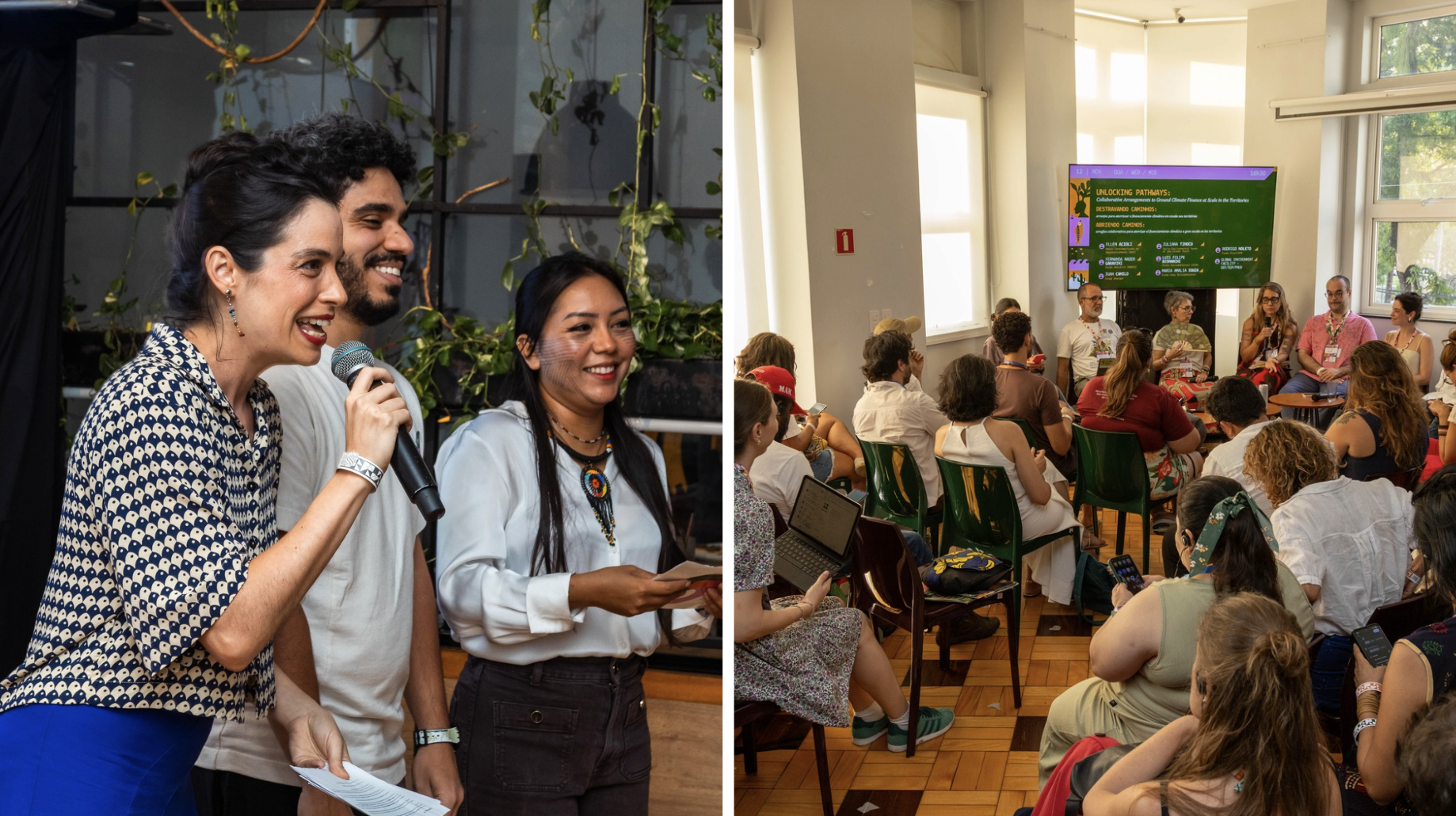
As a point of connection between locally rooted actors and global policy and finance spaces, the Global South House showcases another part of this ecosystem. Created by Alianza, Rede Comuá and partners, it brings locally rooted funds and organisations together at COP processes, with its programme shaped through an open call and a cross-regional curatorial committee.
The Global South House connects experiences from territories to global debates on climate and nature finance, while creating opportunities for collective agenda-setting, political coordination and knowledge production. This is another ecosystem-building function: creating pathways through which knowledge and relationships developed in territories can inform wider policy and funding conversations, while building the capacity of local actors to participate in those spaces over time.
Together, these examples show how different ecosystem-building functions reinforce one another: making philanthropic activity visible, strengthening collaboration across regions and connecting locally rooted actors with wider policy and funding debates. They also demonstrate why localisation cannot be reduced to moving money closer to communities. Stronger ecosystems depend on locally rooted actors having meaningful influence over the knowledge, relationships and decisions that shape philanthropy.
Fund the connective tissue of philanthropic ecosystems
What does this mean for funders? As international funding comes under increasing pressure, sustaining this ecosystem-building work requires long-term investment from both international and domestic philanthropy. Three priorities stand out:
First, fund ecosystem-building for the long term. For both international and domestic funders, ecosystem building needs to be recognised as core support work, rather than treated only as a temporary project around a grantmaking programme. Trust, shared knowledge, relationships and collective influence take years to build. Flexible, long-term funding can help networks and locally rooted institutions sustain this work and respond to changing needs.
Second, assess more than how efficiently an organisation passes money onwards. Ask who sets its priorities, how it is accountable to the communities and actors it works with, how knowledge is produced and shared, and what relationships it builds, and whether it strengthens locally rooted actors’ ability to organise, collaborate and make decisions. For domestic funders in particular, this also means recognising the value of investing in the organisations and networks that strengthen philanthropy within their own context.
Third, invest in connections between different parts of the philanthropy ecosystem. This means supporting relationships between community funds, philanthropic networks, domestic funders, cross-regional alliances and spaces where funding rules and practices are shaped. International funders can play an important role in strengthening these connections, while domestic funders can help build the resources and institutions that make philanthropic ecosystems more resilient over time.
Beyond funding, strengthening philanthropy ecosystems also requires connecting local, regional and global efforts. Across Latin America and the Caribbean, for example, philanthropy support organisations bring different histories, capacities and priorities, alongside shared challenges that benefit from regional collaboration. Through its regional working groups in Africa, Asia-Pacific and LAC, and its wider global network, WINGS creates opportunities for these actors to identify common priorities, learn from experiences across regions and bring locally rooted perspectives into global conversations.
Making ecosystem builders more visible is another part of this work. At WINGSForum 2026 in Montreal, the inaugural WINGS Ecosystem Builder Awards recognised organisations that strengthen philanthropy ecosystems through capacity, capability, connections, credibility, and long-term investment. Among the recipients was Alianza, recognised for connecting socio-environmental funds across the Global South through collaboration, shared learning and collective action.
Yet recognition must translate into sustained support, influence and opportunities for collective action. For WINGS and other actors working to strengthen philanthropy, this also means ensuring that global spaces reflect the priorities and experiences of locally rooted and regional actors.
If philanthropy's monopoly era is ending, the next chapter will also depend on who can shape the institutions, relationships, and rules that follow. The examples emerging from the Global South show that much of the knowledge, leadership and infrastructure needed for this transformation already exists. The opportunity now is to give these actors the recognition, resources and influence to shape the future of philanthropy on their own terms.
Authors:
Mehul Singh is an Independent communications consultant for philanthropy and international development. Beatriz Martínez is/ WINGS Latin America and the Caribbean Regional Coordinator. Learn more about WINGS at wingsweb.org