
This story is part of a series supported through a partnership with Humanity United.
Everyone, it seems, has a vision for the future of development.
Since the dismantling of USAID began in early 2025, something like campaign season has emerged around what should come next. Governments, foundations, think tanks, civil society groups and others have put forward competing visions for what comes next.
The Trust, Accountability and Inclusion Collaborative (TAI) is a funder collaborative that brings major philanthropic donors together to learn, strategize and coordinate. Since August 2025, TAI has been hosting the Secretariat of the Funders’ Roundtable on the Future of Development, convening the CEOs of major foundations to support the emergence of a more effective and equitable global development system. The Roundtable has adopted a four shifts framework to help navigate the fast-evolving development landscape.
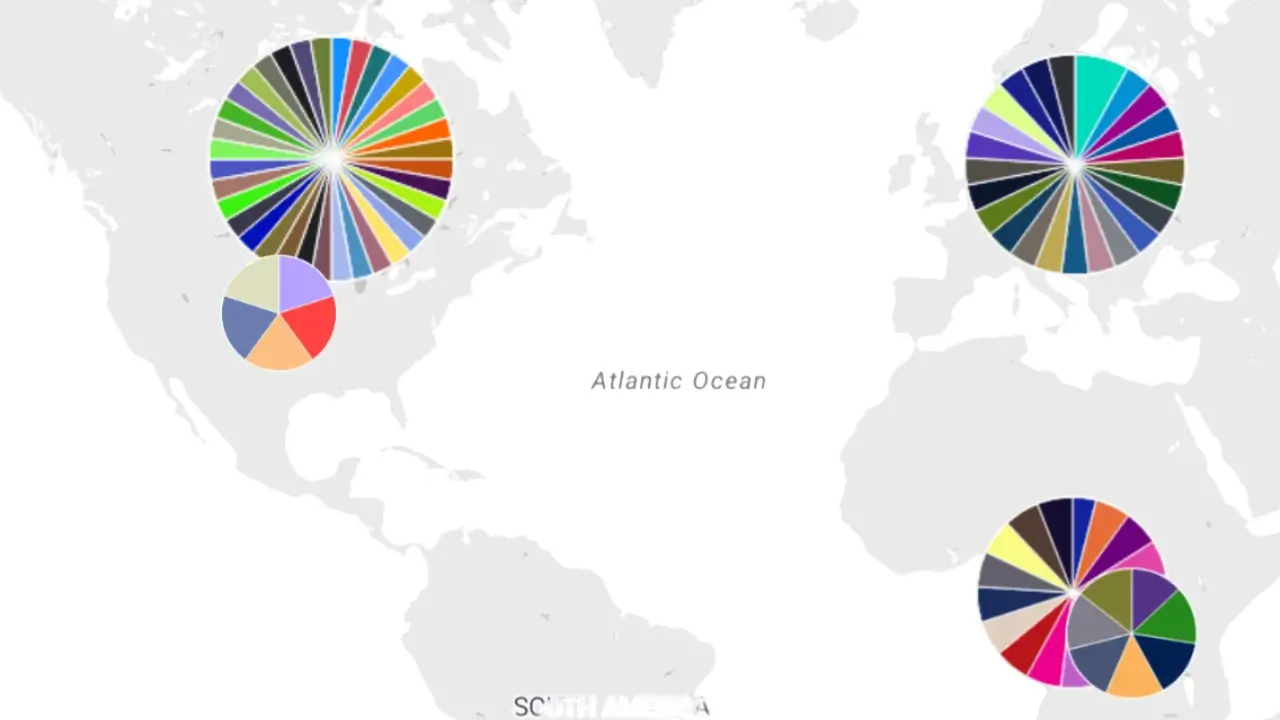
Over the past few months, the Funders Roundtable undertook a first-of-its-kind effort to map the full landscape of initiatives exploring the future of development. So far, they've identified more than 120 initiatives, some of which are focused on preserving and rebuilding what came before, others on creating something entirely new. Notably, 59 of these, or about half, have emerged since 2025. Amid all this activity, several distinct clusters of ideas are beginning to emerge.
One clear strand of activity is the evolving ecosystem of initiatives exploring what comes next for U.S. foreign assistance. TAI recently published four takeaways from their work on this. We spoke with them about those takeaways and the broader project
Your first deep dive into this data was an analysis of what these hundred-plus initiatives are saying about the future of U.S. foreign assistance. What did you learn?
The sheer number of initiatives is striking. We had certain ones on our radar when we started mapping, but we kept finding more. We ultimately identified 120, and we’re certain that there are more. And new ones continue to emerge, like the Commission on the Future of U.S. Foreign Assistance, which is supported by Packard and Rockfeller and co-chaired by Gov. David Beasley and Sen. Ben Cardin.
I think there is a sense of urgency to seize the momentum and try to shape the future direction of US development policy. There are all these conversations, but how can we make sure that they add up to more than the sum of their parts? How do we give a little bit of coherence to all these efforts, that they build on each other, and make sure that they’re actually able to shape the direction of things?
Let’s turn to the other side of the coin. How are Global South countries approaching this conversation differently?
There’s a tension that I’ve observed. On the one hand, you have bilateral donors, particularly in the U.S., talking about moving beyond aid by prioritizing “mutually beneficial” partnerships – advancing their own economic and security interests but also promoting equitable partnerships.
On the other hand, Global South countries frame engagement from a slightly different angle. They’re also talking about moving beyond aid and dependency, but they emphasize agency, being in charge of setting their own priorities, determining how funds are spent, being in the driver’s seat.
There is an additional tension between the focus of many conversations in the U.S. on national security, economic interests and trade, and others asking: What about values-based development? What about solidarity?
There’s a risk that western discussions on the future of U.S. assistance run in parallel to discussions in other parts of the world, without intersecting. I think it’s important to define a vision for the future of U.S. assistance, but it would be a mistake to have that be disconnected from conversations outside of the U.S.
By bringing efforts like the Commission on the Future of U.S. Foreign Assistance into direct dialogue with Global South-led agendas, such as the Accra Reset, we might help bridge the gap between Washington policy circles, philanthropic funders, and proximate leaders around the world.
Locally led development is one of the Roundtable’s four shifts. How central is it to the 120-plus initiatives you’re seeing? One data point you shared is that only ten initiatives – less than 10% – are exploring localisation.
I’ve noticed the language of locally-led development has been deprioritized a bit in the past few months, in favor of conversations about partnerships and country-led development.
Two things strike me about that. First, country-level partnerships are important, but that tends to focus on the relationship between state institutions. We risk leaving civil society, local communities and subnational governments out of the conversation. I think that’s a piece that gets lost in a lot of these conversations when we stop talking explicitly about locally led development.
Second, there’s been some pushback on the term itself, particularly from actors in the Global South. They’re saying, Why talk about “locally led”? It’s local from the perspective of the donors. For those of us who live in those countries and communities, that’s not really the right term.
I also think that, from communities that have traditionally been recipients of aid, there’s a frustration that we’ve been talking for so long about localization, and it’s been so slow and it hasn’t worked well. There is frustration with an agenda that they feel donors have not been sufficiently committed to in practice.
That said, this is a commitment that many of the funders in the Roundtable hold: we need to fund ecosystems spanning grassroots to national level. Decision making of those on the ground is critical to the success of development programming and outcomes.
Shared trust is often built out of shared stories. But localization encompasses a diversity of narratives and narrators, how do you forge a shared narrative that ensures the trajectory for the future of development is based in justice and consensus?
As new narratives emerge about the future of development, we need to keep an eye on whose voices are shaping and promoting those narratives.
It’s not just a question of Global North vs Global South. Are we listening to the perspectives of youth, of women, of religious and community leaders, of entrepreneurs? The more official commissions and equivalents are tapping established experts with a wealth of experience, but that experience was forged in a very different context. We need to be combining their wisdom with that of those forging new paths to development outside of traditional models. We need to be listening and learning with the leaders of the next generation. It is their future at stake.