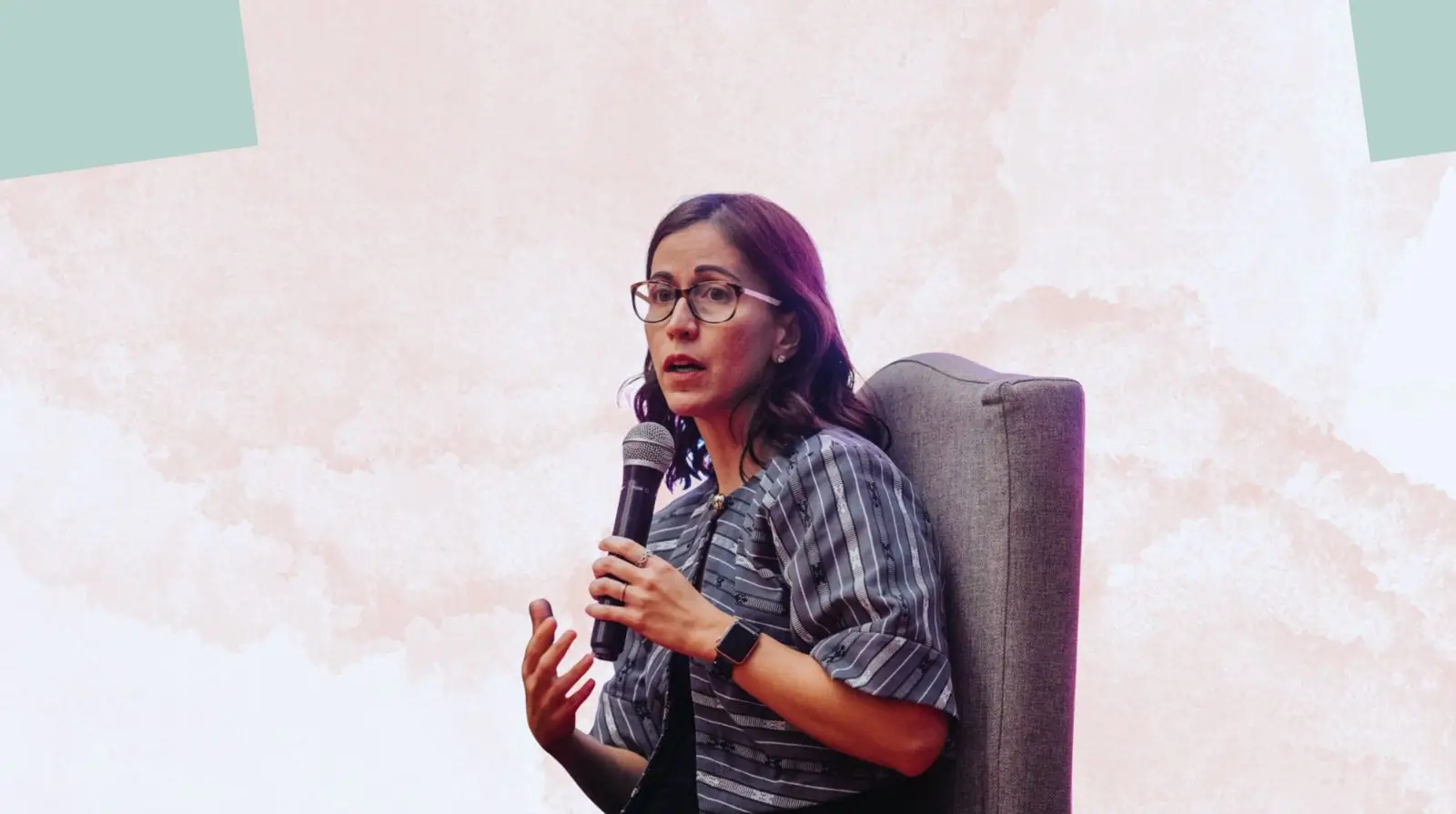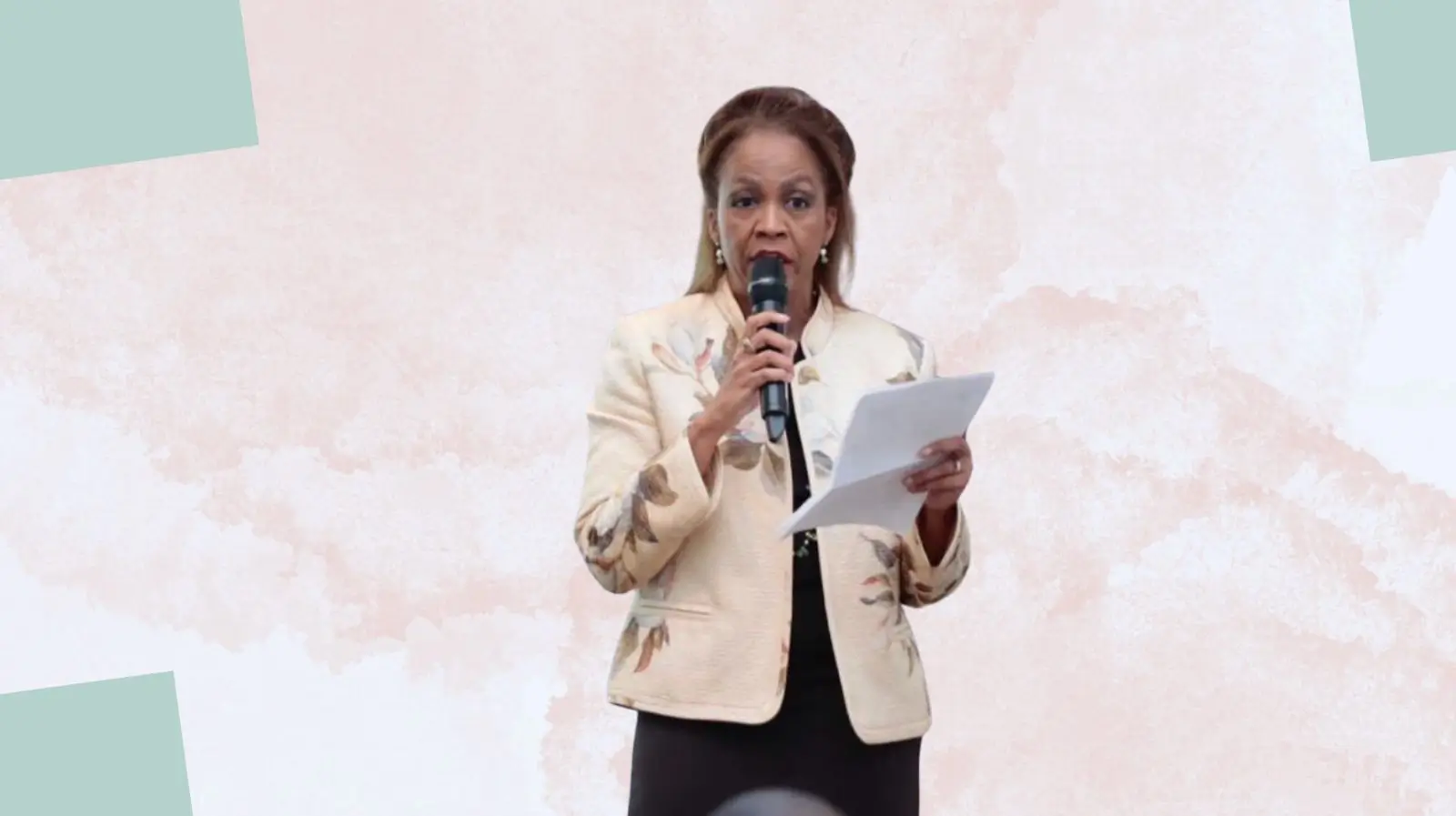

Marie-Rose Romain Murphy has described her efforts at shifting power in international aid and development as like “dragging an elephant.” Yet in spite of the extreme efforts required and the forces massed against it, Marie-Rose was able to catalyze local actors to form the Fondation Communautaire Haitienne (the Haiti Community Foundation). The Foundation is a coalition of Haiti-based organizations who form “a national network of regional funds with a central fund focusing on key challenges facing Haiti.”
Through her own nonprofit ESPWA, Marie-Rose pursues the mission “to leverage and support local Haitian leadership, capacity and ingenuity, in the belief that Haitians themselves are best poised to devise (formulate and implement) effective and relevant solutions to address the country’s development needs.”
Proximate Press spoke with Marie-Rose about the current state of community-led development and the ongoing struggle to dismantle colonial and patriarchal power structures that keep Haitians and other communities from determining their own futures and reaching their full potential.
What is the nature of the work you do?
[I’ve been] working from a community led perspective before it was a trend because I believe that it was just the right thing to do, and it didn't make sense to me to work with communities and not let them take the lead and dictate the terms.
In order to achieve the structural change that we need, we need to have formulas that let communities be in charge of their change – to connect communities from the local to the global, the local to the regional to the global, all the layers – connect them to make sure that the global agenda is changed.
What is driving the increased complexity facing communities, and the increased complexity therefore, in addressing the complex needs of communities?
The mask and the fallacies have been crumbling. For the longest time, aid has hidden behind a mask of altruism, while it's really rooted in colonialism, if not neo-colonialism. And communities, whether it was intentional or not, have been internalizing a certain sense of disempowerment.
The genie is out of the bottle.
Can the genie go back in the bottle? What gives you confidence it won’t, especially right now?
Once an idea comes out and takes form and stretches the mind, it's hard to get it back. And even though we're experiencing a certain level of regression, these ideas have been introduced.
It cannot go away, no matter how much you have conservative forces trying to push them back. These communities are not forgetting, or will not forget, what they have learned over the years, over the decades and even recently, whether it's through the localization or decolonization movements.
You have described yourself as a “translator and bridge builder.” It seems like the core of your work is networked power building. Why is connection so important?
First of all, it's all about the idea that power is to be shared. This is not about ego. This is not about personal agendas. It's about a common vision and really leveraging and harnessing the power of communities. And the reality is that very often, whether we're talking about the local, regional, national level, or at movement level, what really undermines us is the fragmentation.
We have to reflect nature, the fact that we're all connected, the fact that we are all part of an ecosystem, not necessarily controlling it, but really part of it. If we do not come together, and if we do not nurture each other in community, we fail and we self-destroy.
When you suggest a power sharing and an ecosystem approach, what is the accountability mechanism for participants in that collective endeavor? How do you hold people to a consensus approach at a time when international, humanitarian, and human rights law seem to be failing?
I think the consensus has to be our values, the core values. We have seen, especially recently and over the past couple of decades, the decline of the concept and the reality of international law… it's really people connecting to each other, people connecting communities to communities, countries to countries, and just really realizing that we must build consensus that we can create a better future for the next generation, as opposed to the cultures of extraction, the cultures of extreme capitalism and the cultures of oppression that we are experiencing now.
How did the Haiti Community Foundation come into being and why was it necessary?
What happened in Haiti in 2010 only magnified what had always happened when it came to the aid sector’s intervention in Haiti. Haiti has – in terms of the development context or humanitarian context – been dominated and controlled by international organizations. It's been very top down for communities. And community leaders have been marginalized from their own processes.
Only 0.6% [of aid dollars] went directly to Haitian organizations and businesses, and without accountability, without tracking. I mean, that was like a free-for-all. And I was just outraged and enraged.
But when I was talking to people, what I felt was this sense of fragmentation, isolation, disempowerment, and the need for support, the need for connection.
All of these things came first before their concerns about money. And it really made me realize that there needed to be an institutional response to all of that, and that it all needed to start at the community level. When I started [The Haiti Community Foundation], I remember going to a community meeting, a gathering and I said, you know, we have no money. I have no money. But we cannot become the country that we need to become without a proper process. And this process needs to start with the communities.
I was a Haitian, and I worked with Haitians in Haiti and in the diaspora. [Together we were] saying, we want to start a community foundation. And in a sense, we were breaking the rules, because you're supposed to be under the protectorate of some foundation, or have a major donor willing to bankroll it. But that was the most difficult way of engaging, [especially] with a community that is used to being discouraged, disregarded, used and marginalized.
It took sacrifices, but when people started realizing that this vision and this initiative was mobilizing community members… people started getting curious about it.
That [process of building community support] was exhilarating and exhausting and painful and crazy.
Donor governments are abandoning commitments and communities around the globe, most famously with the destruction of USAID. It seems like Haiti – having been abandoned sooner – is now through initiatives like the Haiti Community Foundation further along in pointing the way towards what comes next.
I have to tell you that actually, as far as I'm concerned, my misery doesn't like company.
In the Global South, the Global Majority, we are used to instability. We're used to working on a shoestring. We're used to trying to figure it out, bleeding for causes, subsidizing whatever project grants get thrown our way without overhead, sleepless nights… We're used to having to worry about relatives being kidnapped.
I think that with USAID overnight pulling the work from Global South countries who were overly and widely dependent on the funding… literally caused the death of hundreds of thousands, but also [meant] losing people, losing organizations, losing their funding, their people losing their jobs, in a context where there is no social protection. We're not talking about the US, where you can get unemployment, or countries in Europe that have even more general social protection.
The global north is experiencing this trauma and the sense of insecurity too and realizing that things have changed overnight… They still talk about transformation, but they are really working on self preservation and survival.
What is it that individuals and organizations need to keep in mind at all times that brings them back to cohesion and connection, the translation and bridge building that you do, what's the kind of hallmark that they can grasp on to?
One of the things that I've been trying to do through my consulting, through the international networks I'm involved in, is to change the way people interact with each other. Because you have the Global North mentality, that you have to keep your distance. You have to be professional. What does it mean? How can you really build a movement, and how can you really come together and make significant changes if you don't know about each other, or can you trust each other if you don't share some valuable parts of yourself?
What recommendations do you have for funders or other organizations trying to engage with communities on equitable and equal terms?
We cannot get away from building networks of networks. Global North organizations have gotten very good at doing that, but then most of the time, they're very wary of this entire process of decolonization. So they hang on to the power.
[But] it's probably one of the most critical pieces of work that they could fund if you really want to build a nation, if you really want to build a country's ecosystem, if you really want to build connections within the global majority. You provide the time and the space, as opposed to having people who are already exhausted and under capitalized…do this work.
There is a short story – it's not even a story, because it's extremely brief– where this young woman basically says to an elder, “Father, what about the others?” And the elder responds, “there are no others.”